


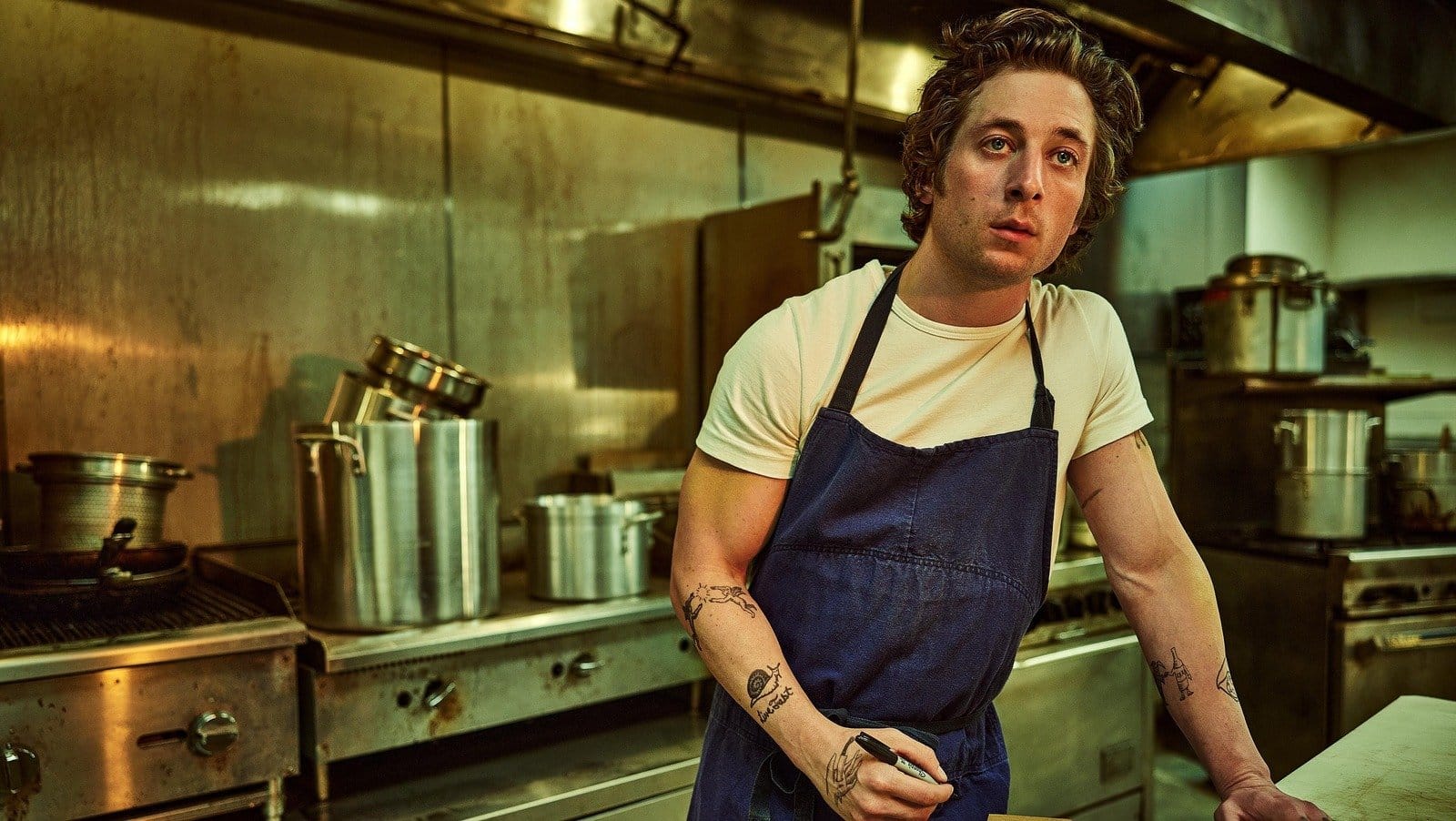
It is rare for a television production to capture the very essence of contemporary anxiety with such precision. The Bear, created by Christopher Storer, does not merely document the daily life of a dilapidated Chicago sandwich shop. It establishes itself as a fierce character study, where the kitchen becomes the stage for a desperate struggle for emotional and professional survival. From the opening minutes, the viewer is thrust into a saturated sensory environment. The sound of knives, the hiss of ranges, and the shouting of the brigade create a cacophonous symphony that offers no respite. This immersion is not a simple stylistic device, it is the very engine of the narrative.
The strength of the series lies primarily in its artistic direction and surgical editing. Each episode feels choreographed like a ballet of urgency. Close-ups on sweating faces, trembling hands, and plates being assembled emphasize a constant state of tension. One thinks particularly of the single-take episode in the first season, a technical feat that illustrates the collapse of a system under pressure. This visual approach reinforces the claustrophobic nature of the setting, transforming the kitchen into a sort of trench where every mistake can prove fatal to the team’s precarious balance.
Jeremy Allen White, in the role of Carmy Berzatto, delivers a performance of rare intensity. A former chef of a three-Michelin-star restaurant forced to take over the family business after his brother’s suicide, he embodies a broken man seeking redemption through technical perfection. His acting, a mix of restraint and sudden explosions, dialogues perfectly with that of his partners. Ayo Edebiri brings a necessary nuance by embodying structured ambition in the face of chaos, while Ebon Moss-Bachrach excels as Richie, an irritating but tragic character who symbolizes a neighborhood identity in transition.

The Bear isn’t just about running a restaurant, it’s about grief, perfectionism, trauma, silence, and survival. In this deeply personal, raw, and reflective review, author Jessica Bertha dissects the FX/Hulu series that flipped the table on what prestige TV could be. Through detailed analysis, character exploration, cultural critique, and personal storytelling, this book walks you into the heat of the kitchen and the pain behind the plate. From Carmy’s unraveling to Sydney’s resilience, from Richie’s redemption to Marcus’s quiet grief, each chapter explores why this show hurts, heals, and haunts.
Beyond the world of gastronomy, The Bear explores universal themes of grief and family legacy. The series questions what we do with our traumas and how passion can become a destructive addiction. The dialogue scenes, often as violent as the rushes in the kitchen, reveal deep cracks. The script skillfully avoids genre clichés to focus on character psychology, making every bit of progress feel rewarding. We observe an organic evolution of relationships, moving from latent hostility to a form of mutual respect forged in adversity.
The writing of the series stands out for its refusal of easy solutions. It does not seek to make its protagonists likable at all costs, but rather to make them authentic. The pursuit of culinary excellence is shown for what it is: an exhausting priesthood that demands immense personal sacrifices. The transition between the old establishment and the creation of a new fine-dining restaurant in subsequent seasons allows the narrative to broaden its scope to artistic creation and the fear of failure. Every member of the brigade, from the pastry chef in search of meaning to the loyal dishwasher, benefits from a narrative depth that enriches the whole.
The Bear thus asserts itself as a pivotal work of the current decade. By marrying a demanding cinematic aesthetic with a visceral and human narrative, it transcends its initial subject. It is not just about food, but about how we try to fix what is broken, whether it is a crumbling restaurant or our own lives. It is a grueling but necessary television experience that leaves a lasting impression long after the kitchen lights have been turned off.

