



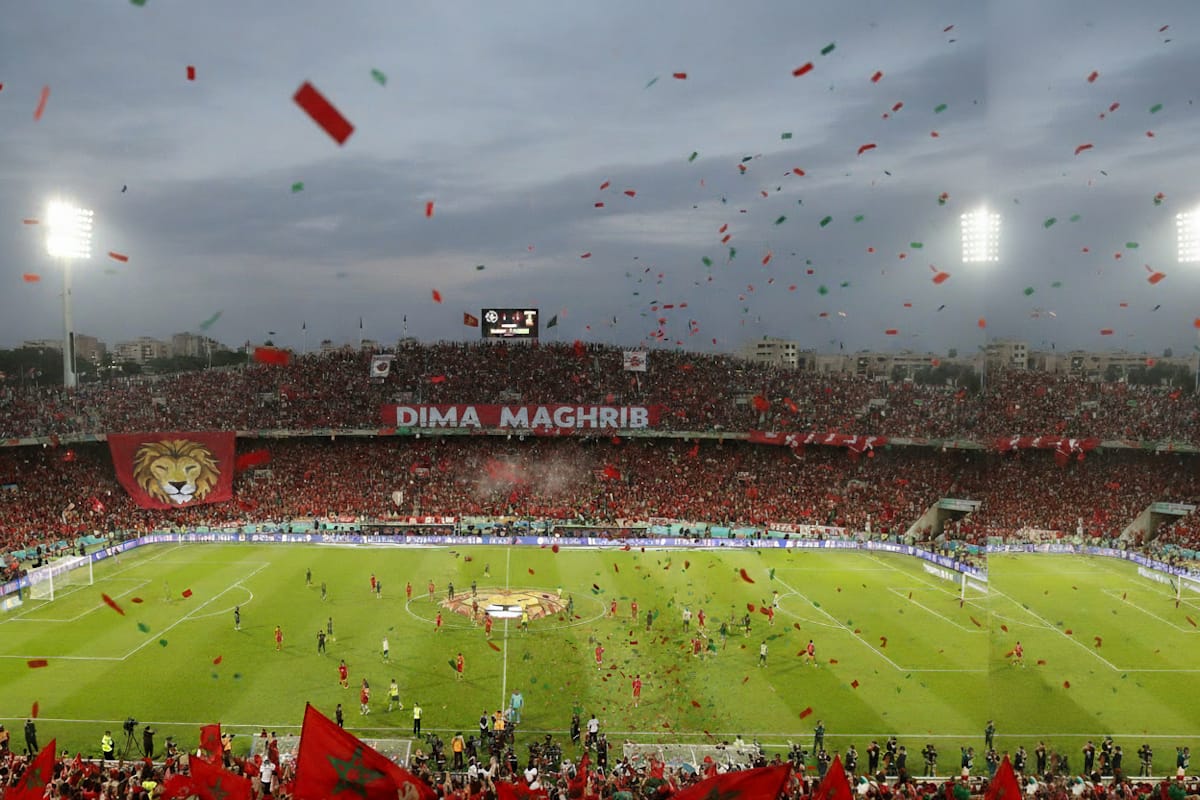

Forged in Africa: The Atlas Lions Begin Their Quest
“From Africa’s Roar to North America’s Dream: The Atlas Lions’ Journey to 2026”
In the heart of North Africa, where the Mediterranean winds kiss the Atlantic shores, Morocco has always understood something fundamental about football: it’s not just a sport—it’s a story. It’s a nation’s heartbeat on a pitch. And for the Atlas Lions, every game in the African Cup of Nations is a chapter in an epic narrative that extends far beyond the continent. It reaches all the way to North America, where the 2026 FIFA World Cup awaits like a promised land.
For readers in the United States, Mexico, and Canada who are just beginning to understand the beautiful game’s global tapestry, here’s what you need to know: Morocco’s journey to your doorstep in 2026 began in Africa’s fiercest battleground. The lessons learned in AFCON’s pressure cooker, the resilience forged against opponents who play with the desperation of nations hungry for continental glory—these are the building blocks of what could become one of football’s greatest underdog stories.
Act One: The Roar of Africa’s Greatest Stage
The African Cup of Nations isn’t just a tournament. It’s an institution. For over 60 years, it has been the proving ground where African nations test their mettle against their fiercest rivals. It’s where tactical brilliance meets raw passion, where underdogs become champions, and where heroes are born from the ashes of heartbreak.
Morocco entered AFCON 2025 as one of the tournament favorites. The squad was loaded with world-class talent: Real Madrid’s Brahim Díaz, the tournament’s leading scorer with five goals; Paris Saint-Germain’s Achraf Hakimi, the silky-smooth defender turned attacking force; Al-Hilal’s Yassine Bounou, a goalkeeper whose presence in the net could move mountains. Coach Walid Regragui had methodically assembled a team capable of winning it all.
But here’s what separates AFCON from every other continental tournament: nothing is guaranteed. In Africa, form and pedigree become secondary to something more primal—hunger. Every team carries the weight of a nation’s dreams. Every goal could change lives. Every match is existential in nature.
The Road to the Final
Morocco navigated through a gauntlet of African football’s elite. Each victory built momentum. Each challenging moment tested character. The semi-final against Nigeria’s Super Eagles became a masterclass in tactical discipline. A penalty shootout decided it—Yassine Bounou became the goalkeeper who saved Morocco’s dreams, making crucial stops that sent the Atlas Lions soaring toward destiny.
The Moroccan nation held its breath. The Atlantic and Mediterranean coasts unified in prayer. From Casablanca to Marrakech, from Fez to Tangier—every city became a sea of red and green, the colors of the national flag. This wasn’t just about football anymore. This was about validation. This was about proving that Africa’s northwestern jewel could claim continental supremacy.
Act Two: The Crucible—Where Champions Are Tested
They say pressure reveals character. It exposes weaknesses. It magnifies strength. And in that Prince Moulay Abdellah Stadium, under the weight of an entire nation’s aspirations, Morocco faced Senegal in a collision that would define not just a tournament, but a footballing era.
The match was biblical in scope. Full-time ended goalless. Extra time arrived. The tension became unbearable. And then, in the 113th minute, Senegal’s Pape Gueye struck. One moment of brilliance. One instant of geography on the pitch. One goal that would rewrite narratives.
But here’s where the story takes a turn toward what truly matters: In that moment of defeat, Morocco discovered something invaluable. The Atlas Lions didn’t crumble. They didn’t fade into despair, at least not publicly. Brahim Díaz, the tournament’s leading scorer, took responsibility for his missed penalty in extra time. His Instagram post afterward will be remembered for its raw humanity: “My heart hurts. It’s going to be hard for me to get up, because this wound doesn’t heal easily, but I’ll try.”
Resilience Redefined
This is the moment that matters. Not the trophy. Not the victory. But the response. The Moroccan government rallied behind Díaz. The nation embraced its team. Coach Regragui and his staff immediately pivoted—not toward self-pity, but toward the future. They asked themselves: What can we learn? How do we grow? What does it take to win on the world’s biggest stage?
Because here’s the truth that North American football fans need to understand about the African Cup of Nations: it’s more brutal, more emotionally raw, than even the World Cup. The margins are thinner. The stakes feel higher because nations with fewer resources are fighting for global relevance. One missed penalty in Rabat becomes a teaching moment for a team preparing to challenge the world in 2026.
Morocco’s journey through AFCON had accomplished something invaluable: it had forged resilience in the face of heartbreak. It had demonstrated that these players could compete at the highest level. It had shown that Coach Regragui’s tactical innovations and strategic vision were sophisticated enough to stand against Africa’s elite. And most importantly, it had unified a nation around a larger dream.
Act Three: From Africa’s Roar to North America’s Dream
Fast forward just days after the final whistle. The pain is still fresh. The wound hasn’t closed. But Morocco’s FIFA World Ranking climbs to 8th place—the highest in the nation’s history. This single statistic encapsulates everything that AFCON means to the World Cup trajectory.
Morocco didn’t just qualify for the 2026 World Cup—they qualified perfectly. A flawless qualifying campaign. Eight matches. Eight victories. Zero defeats. The message was unmistakable: We aren’t coming to North America as guests. We’re coming as contenders.
For American, Mexican, and Canadian football enthusiasts, here’s what this means: The 2026 World Cup will feature a Moroccan team that has just been through football’s most intense continental pressure cooker. They’ve faced Nigeria. They’ve battled Senegal under their own roof. They’ve experienced the crushing weight of national expectation and emerged not broken, but transformed.
The Strategic Advantage
Coach Walid Regragui is not a man who believes in dwelling. His focus has already shifted. He’s spoken publicly about approaching the World Cup with “ambition and humility”—a rare combination that suggests a team ready to surprise. His tactical masterclass against Nigeria (neutralizing their attacking threats while maintaining offensive balance), his ability to read the room and adjust in real time, his youth development strategy that ensures sustained competitiveness—these are the hallmarks of a coaching mind preparing for something greater.
The AFCON experience has given Regragui and his squad something intangible but invaluable: tournament experience under maximum pressure. They’ve played knockout football. They’ve won penalties. They’ve handled the hysteria of a home crowd. They’ve tasted defeat at the moment of greatest promise. These aren’t theoretical advantages—they’re battle scars that will guide their World Cup campaign.
When Morocco faces Brazil in their opening World Cup group (as recently confirmed in the draw), they won’t be trembling. They’ll be thinking of Rabat. They’ll remember the 70,000 voices. They’ll recall that they’ve already played at that emotional intensity level—perhaps even higher. They know they can compete with the planet’s best.
The Passion That Transcends Geography
Here’s what makes Morocco’s story particularly compelling for North American audiences: this is a team carrying the dreams of an entire diaspora. The Moroccan-American, Moroccan-Canadian, and Moroccan-Mexican communities will descend upon the 2026 World Cup with a fervor that will make stadiums shake. Imagine 80,000 people in a U.S. city screaming for the Atlas Lions in the same way they screamed in Rabat. That’s coming.
The passion forged in Africa will follow Morocco across the Atlantic. The lessons learned in AFCON will be applied in North American venues. The identity sharpened in continental competition will be tested against global rivals. And for fans who haven’t been paying attention to African football, the 2026 World Cup will introduce them to a team and a nation with something to prove.
Epilogue: The Promise Written in African Soil
The African Cup of Nations isn’t an ending for Morocco—it’s a prologue. The missed penalty. The heartbreak. The narrow defeat. These are plot points in a much longer narrative. In January 2026, the Atlas Lions discovered something: they belong on football’s biggest stages. They can compete with anyone. They can dream bigger.
For readers in the United States, Mexico, and Canada: mark your calendars. In just a few months, you’ll be watching a team that has been forged in Africa’s fires. You’ll see players who have already handled pressure at levels most athletes never experience. You’ll witness a nation’s dreams made manifest on the World Cup stage.
Brahim Díaz’s heart still hurts. But his determination burns brighter. Yassine Bounou’s saves in Rabat echo in his muscle memory. Achraf Hakimi carries the weight of a nation’s hopes. And Walid Regragui is already planning for something greater than continental glory.
The roar of the Atlas Lions that echoed across African stadiums in January 2026 wasn’t a final goodbye—it was a prelude. A promise. A declaration that Africa’s newest football power is ready to challenge the world.
From Africa’s crucible to North America’s promise: this is where the real story begins.




as a professional seo expert in hamburg, i can tell your article is professionally written, i enjoy reading it, keep up the good work, do you post more often ? i am now a follower, you can take a look at my site as the best seo expert in hamburg https://seoexpertehamburg.de/ Thank you
this is an interesting article, i enjoy reading it, keep up the good work, do you post often, i want to start following you. my site is https://webdesignfreelancermunchen.de/ it is the top webdesign freelancer platform in Germany.