



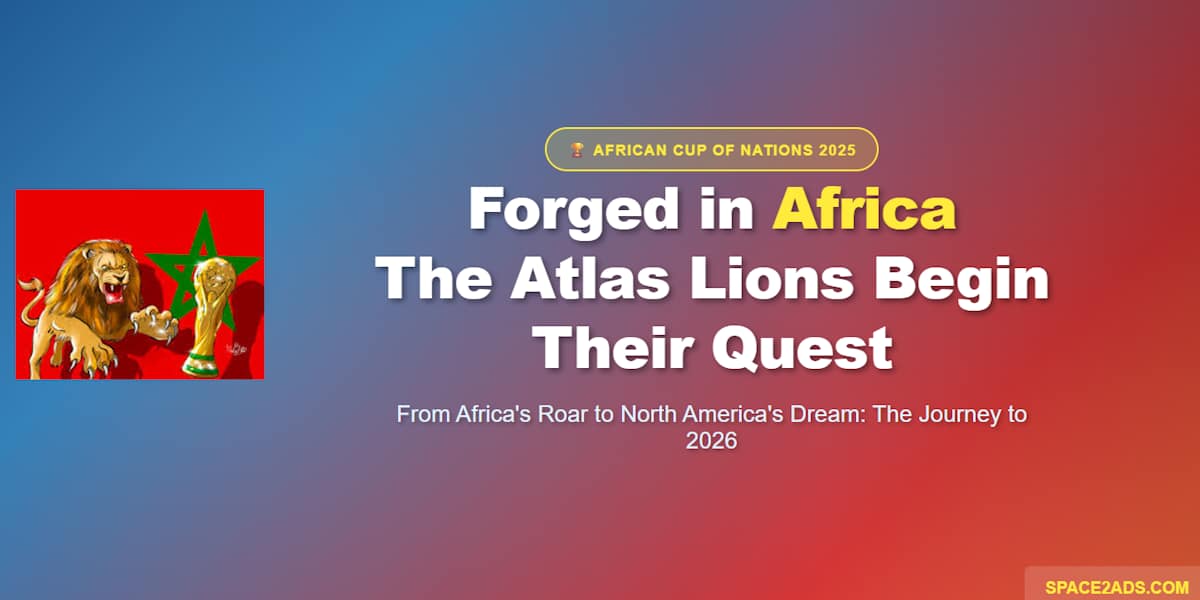

Summary: The African Cup of Nations is the crucible where Morocco’s Atlas Lions sharpen their identity. This opening chapter explores how resilience and passion are forged in Africa’s fiercest competition, setting the stage for a global dream. From continental dominance to world prominence, Morocco’s footballing narrative is being written on the biggest stages.
The Roar Echoes Across the Continent
When the whistle blew on the African Cup of Nations 2025, Morocco’s Atlas Lions had demonstrated something profound about the nation’s footballing evolution. Hosted on home soil in Morocco, the tournament became more than just a sporting spectacle—it transformed into a cultural awakening that unified millions across North Africa and beyond. The Atlas Lions’ campaign showcased the very essence of African football: raw passion, tactical sophistication, and an unyielding will to succeed against impossible odds.
Morocco reached the AFCON 2025 final, where they faced Senegal’s Teranga Lions in an electrifying showdown at the Prince Moulay Abdellah Stadium. Although the match ended in heartbreak with a narrow 1-0 defeat in extra time, the tournament itself became a watershed moment for Moroccan football. The Atlas Lions proved they belonged among Africa’s elite, and more importantly, they demonstrated the mental fortitude and tactical acumen required to compete at the highest levels of international football. This wasn’t a moment of despair but rather the foundation upon which future glory would be built.
Resilience: The Hallmark of Champions in the Making
Throughout the African Cup of Nations, Morocco displayed a remarkable resilience that captured the imagination of football enthusiasts worldwide. Coach Walid Regragui’s tactical masterclass was evident in every match, as the team navigated through some of the tournament’s most formidable opponents. The penalty shootout victory against Nigeria in the semi-final, with goalkeeper Yassine Bounou delivering a heroic performance, exemplified the mental strength that defines champions.
This resilience extends beyond individual matches or tournament performances. It represents a deeper commitment from the Moroccan football federation and its players to build a sustainable winning culture. Real Madrid’s Brahim Díaz emerged as the tournament’s leading scorer with five goals, proving that Morocco’s soccer talent pool can compete on the global stage. The presence of world-class talent like Achraf Hakimi and other stars in Europe’s top leagues demonstrates that Morocco has transcended the limitations of being solely an African football power—they are now recognized as contenders in world football.
World Cup 2026: The Global Dream Takes Shape
While the AFCON 2025 final brought disappointment, it paradoxically strengthened Morocco’s candidacy as a serious contender for the 2026 World Cup. The Atlas Lions surged to 8th place in the FIFA World Rankings, reaching their highest-ever position in international football hierarchy. This remarkable achievement reflects years of careful team building and strategic development under Regragui’s leadership. More significantly, it signals that Morocco’s journey doesn’t end in Africa—it extends to North America, where the FIFA World Cup will be hosted across the United States, Canada, and Mexico.
The narrative of the World Cup 2026 journey for Morocco is uniquely compelling. Morocco secured World Cup qualification by winning all eight matches in their qualifying campaign—a perfect record that underscores their dominance and preparation. This flawless qualification campaign wasn’t accidental; it was the direct result of the team’s experience in the AFCON tournament, where they tested themselves against the continent’s best and emerged stronger for it. The lessons learned from intense African competition translate seamlessly to world tournament preparation.
From Continental Prominence to Global Recognition
The path to the 2026 World Cup represents a quantum leap in ambition for Morocco’s national football team. Unlike their previous World Cup appearances, this campaign carries the weight of genuine expectations. Morocco has proven it can compete with Africa’s best and now must prove it can stand toe-to-toe with the world’s elite. The contrast is striking: while AFCON represents continental dominance, the World Cup stage demands global excellence.
The economic and cultural impact of this journey cannot be overstated. AFCON 2025 generated approximately €1.5 billion in economic benefits for Morocco despite the final defeat, demonstrating the commercial viability and global appeal of African football. This financial success provides crucial investment in youth development programs, stadium infrastructure, and coaching education—elements essential for sustaining long-term competitive excellence. Every run in international tournaments strengthens the foundation for future success.
The Identity Forged in African Fires
What makes Morocco’s quest particularly significant is the identity being forged through adversity and competition. The Atlas Lions are not simply a football team competing for trophies; they represent a nation’s aspirations, a continent’s potential, and an entire generation’s dreams. The tournament experience—from the roaring stadiums to the pressure-packed moments—creates a collective memory that defines a nation’s footballing culture.
The mentality cultivated during AFCON tournaments transfers directly to World Cup preparation. Players learn to handle extreme pressure, adapt to intense atmospheres, and maintain focus when everything seems to work against them. These psychological advantages, earned through African competition, become invaluable when competing in global tournaments. The resilience shown in the AFCON 2025 campaign proved that Morocco possesses the character required to perform on the world’s biggest stage.
Looking Forward: The North American Dream
As Morocco prepares for the 2026 World Cup, the lessons from AFCON 2025 will serve as both motivation and instruction. The narrow defeat to Senegal provides a powerful reminder that margins at the highest level are razor-thin, but it also proves that Morocco can compete with any nation on any stage. The Atlas Lions will arrive in North America with the confidence of a team that has been tested against the world’s toughest competitors and emerged with their heads held high.
The journey from Africa’s fiercest competition to North America’s grand stage represents the ultimate expression of footballing ambition. For Morocco, the World Cup 2026 isn’t just an opportunity—it’s a destiny being written with every training session, every competitive match, and every moment of collective determination. The roar of the Atlas Lions that echoed across African stadiums will soon reverberate through North American venues, carrying with it the hopes and dreams of an entire nation.
The Beginning of Something Extraordinary
This isn’t an ending; it’s a beginning. The AFCON 2025 campaign, while ending in heartbreak, represents the foundational chapter of a much larger story. Morocco’s football has evolved from regional aspiration to global ambition. The Atlas Lions have been tested in Africa’s crucible and have emerged stronger, smarter, and more determined. As they prepare for the World Cup in North America, they carry with them the wisdom of African competition, the hunger of a continental power, and the unyielding belief that they belong on football’s biggest stage.
From the passionate supporters in Moroccan cities to the young talents dreaming of international stardom, the entire nation is invested in this quest. The 2026 World Cup represents more than a tournament—it represents validation, recognition, and the fulfillment of a collective vision. The Atlas Lions’ roar will soon echo across North America, reminding the world that African football has produced not just competitors, but champions in the making.










Leave a Comment