



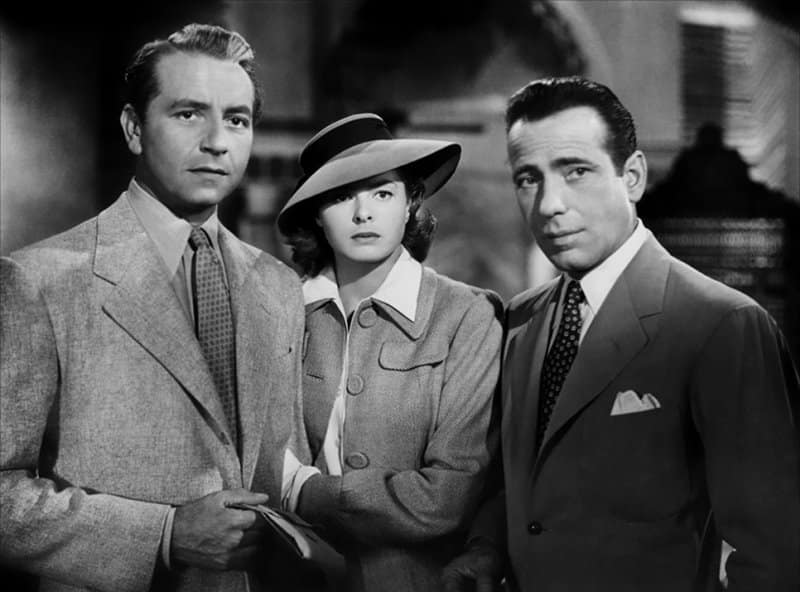

Every cinematic era produces forgotten films and unexpected triumphs, but few possess the strange alchemy that transforms a routine wartime drama into eternal art. Casablanca (1942), directed by Michael Curtiz, arrived in theaters as just another Warner Bros. production—hastily scripted, plagued by rewrites, and shot with only half a completed screenplay. Yet from this chaos emerged what many consider among the best screenplays of all time and a film whose visual sophistication established new standards for Hollywood cinematography. More than eight decades later, it remains the gold standard for romance and political drama.
Curtiz’s Visual Mastery
Michael Curtiz brought a European sensibility to Hollywood’s studio system, deploying what would become his signature style: artistic lighting, extensive fluid camera movement, high crane shots, and unusual angles that kept audiences viscerally engaged. His auteurship perfectly aligned with Warner Brothers’ house style—gritty political dramas shot with dark realism and energetic pacing that favored story over spectacle.
Working alongside cinematographer Arthur Edeson, ASC (who earned his third Oscar nomination for this work), Curtiz created a visual language that enhanced every emotional beat. Edeson’s mastery of chiaroscuro lighting—the interplay between light and shadow—added psychological depth to each frame. The flashback sequences between Rick Blaine and Ilsa in Paris are bathed in soft, romantic high-key lighting that evokes memory’s golden haze, while present-day Casablanca scenes employ low-key lighting filled with shadows and high contrast, reflecting moral ambiguity and wartime tension.
The film noir aesthetic Curtiz and Edeson pioneered—characterized by dramatic shadows, unique angles, and action-paced camerawork—produced some of cinema’s most stunning close-ups, particularly of Ingrid Bergman, whose luminous face became a canvas for conflicting emotions. This visual sophistication transformed a B-picture into high art, demonstrating how technical mastery serves storytelling.
Rick Blaine and the Architecture of Sacrifice
At the film’s moral center stands Rick Blaine, the cynical American expatriate whose café américain serves as neutral ground in Nazi-occupied Morocco. Humphrey Bogart’s performance established the template for the reluctant hero—world-weary yet principled, wounded yet capable of redemption. His journey from isolationism (“I stick my neck out for nobody”) to selfless action embodies the film’s central theme: sacrifice as the highest expression of love and heroism.
When Ilsa Lund walks into his gin joint accompanied by resistance leader Victor Laszlo, Rick faces an impossible choice between reclaiming lost love and enabling the greater fight against fascism. This tension between personal desire and collective duty elevates Casablanca beyond melodrama into genuine tragedy. The screenplay by Julius and Philip Epstein, alongside Howard Koch—rightfully considered one of the best screenplays of all time—refuses easy answers, acknowledging that doing the right thing often means accepting heartbreak.
Themes That Transcend Time
Casablanca operates on multiple thematic levels simultaneously. The surface narrative delivers wartime intrigue and romantic longing, but deeper currents explore exile, identity, and moral responsibility. Set in a city of desperate refugees where exit visas mean survival, the film captures the human cost of authoritarianism with uncomfortable relevance even in 2026.
The legendary La Marseillaise scene exemplifies how Curtiz balanced political urgency with emotional storytelling. When café patrons drown out Nazi officers with the French national anthem, tears streaming down faces communicate everything about occupation and the ache for freedom. It’s a moment of resistance requiring no exposition—pure visual and emotional cinema.
The theme of sacrifice reaches its apotheosis in the fog-shrouded airport finale, where Rick risks everything to ensure Ilsa and Victor escape. He holds Captain Renault at gunpoint, abandons his business, and relinquishes the woman he loves—not because virtue triumphs easily, but because some battles matter more than personal happiness. This moral complexity distinguishes Casablanca from simpler wartime propaganda.
The Power of the Ensemble
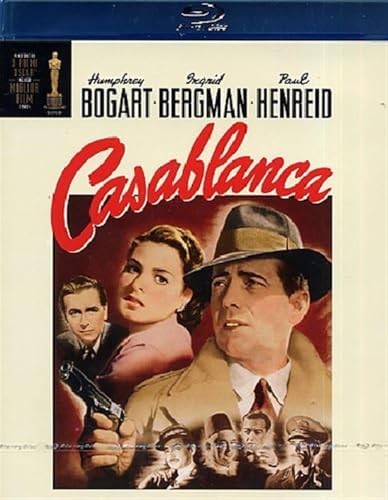
While Bogart and Bergman dominate the screen, Paul Henreid’s Victor Laszlo completes the triangle not as villain but as idealism incarnate. He represents everything Rick abandoned: commitment, selflessness, purpose. The film’s refusal to diminish any character creates genuine dramatic tension—we understand why Ilsa loves both men, and why choosing between them feels impossible.
The supporting cast—Claude Rains’s opportunistic Captain Renault, Peter Lorre’s desperate Ugarte, Sydney Greenstreet’s corrupt Signor Ferrari—populate Casablanca with vivid humanity. Combined with Carl Jules Weyl’s art direction and Orry-Kelly’s costume design, they create a fully realized world where every frame feels authentic.
The Accidental Perfection
Casablanca shouldn’t work. The script remained unfinished during filming, the ending was rewritten multiple times, and the production was rushed. Yet these limitations became strengths, creating urgency that polished perfection could never achieve. It’s a testament to collaborative artistry—Curtiz’s visual genius, Edeson’s cinematographic innovation, the Epsteins’ quotable dialogue (“Here’s looking at you, kid,” “We’ll always have Paris”), and performances that defined the Golden Age of Hollywood.
The film premiered November 26, 1942, perfectly timed to capitalize on wartime sentiment, though France wouldn’t see it until 1947. Its success demonstrated that sophisticated filmmaking and popular appeal need not be mutually exclusive.
Why It Endures
Casablanca remains essential viewing because it understands that great love stories are fundamentally about what we cannot have. Rick and Ilsa’s relationship exists in eternal suspension, forever preserved before goodbye. As Rick walks into the mist with Renault—”the beginning of a beautiful friendship”—we recognize we’ve witnessed something rare: accidental perfection that defined what cinema could be.







Leave a Comment