


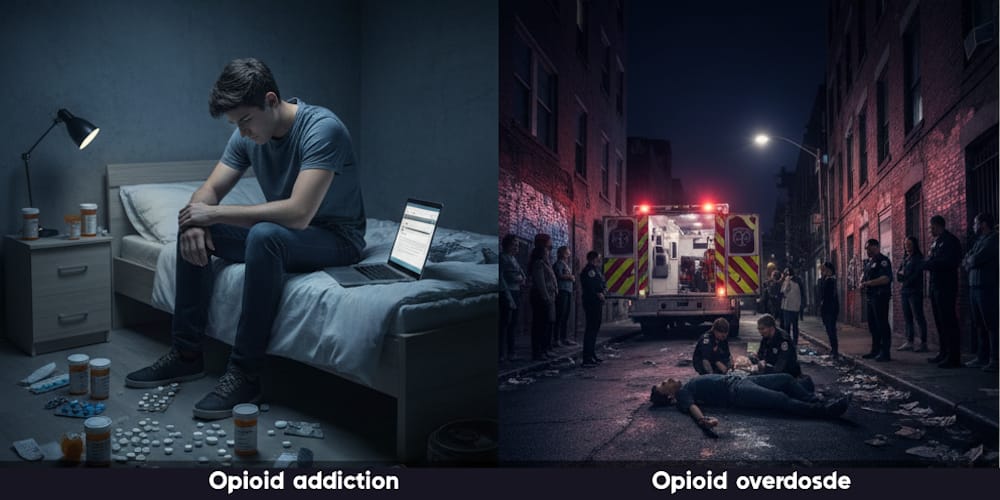
A dentist prescribes 30 oxycodone tablets after wisdom tooth extraction. A surgeon sends a patient home with 90 hydrocodone pills following minor knee surgery. A physician renews prescription painkillers month after month for chronic back pain that never improves. These scenarios repeat millions of times annually, each representing a potential gateway to addiction, overdose, or death. What began as legitimate medical treatment transforms into dependency with devastating consequences.
The prescription opioid epidemic has claimed hundreds of thousands of lives globally over recent decades, with deaths continuing to climb despite growing awareness. Unlike illicit drug crises of previous eras, this epidemic originated in doctors’ offices and pharmacies—prescribed by trusted medical professionals, dispensed by licensed pharmacists, taken exactly as directed. The very institutions designed to protect health instead became vectors for addiction, creating what public health experts consider one of the deadliest drug crises in modern history.
This article examines how prescription painkillers evolved from medical breakthrough to public health catastrophe, exploring the pharmaceutical industry practices, prescribing patterns, and systemic failures that enabled the epidemic. You’ll understand the neurological mechanisms making opioids so addictive, learn to recognize dependency’s warning signs, and discover evidence-based approaches for pain management and addiction treatment.
Understanding Prescription Opioids
Prescription opioids represent a class of powerful pain-relieving medications derived from or chemically similar to compounds found in opium poppy plants. While effective for certain types of pain, their addictive properties create substantial risks often inadequately communicated to patients.
Common Prescription Opioids
The most frequently prescribed opioid medications include:
- Oxycodone: Originally marketed as abuse-deterrent with time-release formulation, later revealed as highly addictive
- Hydrocodone: Among the most commonly prescribed opioids worldwide for moderate to severe pain
- Morphine: Traditional opioid standard used for severe pain, particularly in hospital settings
- Codeine: Weaker opioid often combined with acetaminophen, frequently prescribed for moderate pain and cough
- Fentanyl: Synthetic opioid 50-100 times more potent than morphine, prescribed as patches or lozenges
- Tramadol: Synthetic opioid marketed as having lower addiction risk, though dependency still occurs
How Opioids Work
Understanding opioids’ mechanism reveals why they’re simultaneously effective and dangerous. Opioids bind to specific receptors throughout the brain, spinal cord, and digestive system, blocking pain signal transmission and altering pain perception. This makes them highly effective for acute severe pain like post-surgical recovery or traumatic injuries.
The same receptors controlling pain also regulate reward and pleasure. Opioid binding triggers massive dopamine release in the brain’s reward center, creating powerful positive reinforcement driving continued use. The brain adapts to opioid presence by reducing natural opioid production and decreasing receptor sensitivity, meaning progressively higher doses become necessary to achieve the same effects—a phenomenon called tolerance that develops within days to weeks.
Regular opioid use changes brain chemistry such that the brain requires opioids to function normally. Without them, withdrawal symptoms emerge—not because the person lacks willpower but because their neurochemistry has adapted to opioid presence.
The Evolution of an Epidemic
The prescription opioid crisis didn’t emerge spontaneously—it resulted from deliberate decisions by pharmaceutical companies, regulatory failures, and systemic healthcare problems that converged into perfect storm conditions.
The Pharmaceutical Industry’s Role
Pharmaceutical companies launched unprecedented campaigns promoting opioids for chronic pain management, claiming drugs carried minimal addiction risk—assertions often lacking scientific support. Companies paid doctors substantial fees for speaking engagements, consulting, and research promoting opioid prescribing. They funded patient advocacy groups, medical societies, and continuing education programs that promoted expanded opioid use while downplaying addiction risks.
Internal documents later revealed companies knew about addiction risks while publicly minimizing them, with several facing criminal charges for misrepresenting medications’ addiction potential.
Prescribing Pattern Failures
Medical education and practice patterns enabled the epidemic’s growth. Most physicians received minimal education about addiction, appropriate opioid prescribing, or pain management alternatives during training. Studies show dramatic variation in prescribing between providers for identical procedures, with some prescribing 10 times more pills than others without improved outcomes.
Research reveals most patients require fewer than 10 opioid pills for typical acute pain, yet average prescriptions often contain 30-90 pills, leaving excess medication available for diversion or continued use. Opioids show limited long-term effectiveness for chronic non-cancer pain, yet many patients remained on them indefinitely once started.
The Pathway to Addiction
Not everyone prescribed opioids develops addiction, but certain factors increase risk including genetic predisposition, prior substance use history, mental health conditions like depression or anxiety, chronic stress, and trauma history. These factors significantly increase addiction susceptibility.
The Progression Pattern
Prescription opioid addiction typically follows recognizable stages. Patients receive prescriptions for acute pain following injury or surgery, taking medication as directed and experiencing pain relief. As tolerance develops, the original dose becomes less effective, leading to requests for refills or dose increases. Psychological dependence emerges as patients associate opioids with pain relief and positive feelings, with anxiety developing around running out of medication.
Loss of control follows—using more than prescribed, obtaining medications from multiple sources, or using medications prescribed for others. Life eventually revolves around obtaining and using opioids, with continued use despite serious negative consequences. Many transition to cheaper street alternatives when prescriptions become unavailable.
The Heroin Connection
A critical aspect involves progression to illicit drugs. The vast majority of heroin users report their addiction began with prescription opioids. As prescriptions become harder to obtain due to crackdowns, users turn to street drugs that cost substantially less than prescription opioids on illegal markets. Fentanyl contamination of the heroin supply has dramatically increased overdose deaths, with prescription opioid users lacking street drug experience facing heightened overdose risk.
Warning Signs and Risk Assessment
Early recognition enables intervention before addiction fully develops. If you’re taking prescription opioids, honestly evaluate whether you’re taking more medication than prescribed, feeling anxious when running low, obtaining opioids from multiple sources, continuing despite pain improvement, or taking them for reasons beyond pain relief. Have family members expressed concern? Do you hide medication use? Have you experienced withdrawal symptoms when doses are late?
Answering “yes” to multiple questions suggests problematic use warranting professional evaluation. Loved ones often recognize concerning patterns before users acknowledge them, noticing medication running out early consistently, increased isolation, mood changes related to medication availability, or doctor shopping behavior.
The Devastating Consequences
Prescription opioid addiction radiates effects far beyond individual users, creating ripples throughout families, communities, and healthcare systems.
Individual Health Impacts
Opioids suppress breathing, with high doses causing respiratory arrest and death. Many overdose victims had legitimate prescriptions and no intention of getting high. Those who transition to injection face risks including HIV, hepatitis C, and serious bacterial infections. Chronic opioid use suppresses hormone production, causing sexual dysfunction, reduced bone density, and mood problems.
Paradoxically, long-term opioid use can increase pain sensitivity, worsening the condition they were prescribed to treat. Chronic use affects memory, attention, and decision-making even when not acutely intoxicated.
Family and Social Consequences
Babies born to mothers taking opioids experience withdrawal, requiring hospitalization and potentially causing long-term developmental effects. Parental opioid addiction drives foster care system growth. Addiction strains marriages and family bonds through dishonesty, financial stress, and personality changes, while family members assume responsibility for users’ obligations while managing emotional trauma.
The epidemic costs economies billions annually through healthcare expenses for addiction treatment and overdose care, lost workplace productivity, criminal justice costs, and child welfare system expenditures. Healthcare systems face particular challenges as emergency departments manage overdose crises while addiction treatment capacity remains inadequate for demand.
Evidence-Based Pain Management Alternatives
Effective pain management without opioids is possible for most conditions through multimodal approaches combining various strategies.
Non-Opioid Medications
Anti-inflammatory medications like ibuprofen and naproxen prove effective for many acute and chronic pain conditions without addiction risk, combining well with acetaminophen for enhanced effect. Topical analgesics provide localized pain relief without systemic effects. Certain antidepressants effectively treat neuropathic pain and fibromyalgia, while anticonvulsants address nerve pain without opioid-related risks.
Physical and Interventional Approaches
Structured exercise programs, manual therapy, and functional training often prove more effective than medications for musculoskeletal pain. Targeted injections, nerve blocks, and radiofrequency ablation procedures provide pain relief for specific conditions. Implanted devices can modulate pain signals for certain chronic pain conditions, while acupuncture shows evidence supporting effectiveness for various pain types.
Behavioral and Psychological Interventions
Cognitive Behavioral Therapy addresses thought patterns and behaviors maintaining pain and distress, with strong evidence for chronic pain management. Acceptance and Commitment Therapy helps patients live meaningful lives despite pain rather than pursuing complete pain elimination. Mindfulness-based stress reduction, meditation, and biofeedback all contribute to reducing pain intensity and improving function.
Lifestyle Modifications
Regular exercise appropriate to capabilities, weight management, sleep hygiene improvements, stress management techniques, anti-inflammatory dietary approaches, and smoking cessation all contribute to pain reduction across various conditions.
Treatment and Recovery from Opioid Addiction
Prescription opioid addiction is highly treatable with appropriate medical care, though recovery requires comprehensive support addressing both physical dependence and underlying factors driving use.
Medication-Assisted Treatment (MAT)
MAT represents the gold standard for opioid addiction, combining medications with counseling and behavioral therapies. Evidence overwhelmingly demonstrates MAT’s superiority over abstinence-only approaches.
Methadone is a long-acting opioid preventing withdrawal and cravings without producing euphoria at therapeutic doses, reducing overdose death risk by 50% and substantially improving treatment retention. Buprenorphine offers similar benefits with lower overdose risk and ability to prescribe from medical offices. Naltrexone is an opioid blocker preventing opioids from producing effects, effective for motivated individuals who’ve completed withdrawal.
Detoxification and Withdrawal
Opioid withdrawal, while intensely uncomfortable, is not life-threatening for most people. Symptoms include anxiety, muscle aches, nausea, sweating, and insomnia. Supervised medical detox uses medications to ease symptoms, making withdrawal substantially more comfortable and typically lasting 5-7 days for short-acting opioids.
Behavioral Therapies and Support
Individual counseling addresses underlying issues and develops coping skills, with Cognitive Behavioral Therapy and motivational interviewing showing strongest evidence. Group therapy provides peer support and reduces isolation. Family therapy involves loved ones in recovery and addresses family dynamics maintaining addiction.
Mutual support programs offer free, widely available peer support. Recovery community centers provide non-clinical settings with various support services and peer connections. Peer recovery specialists with lived addiction experience provide support, mentorship, and navigation assistance.
Treatment Settings
Treatment intensity ranges from outpatient therapy with regular appointments while living at home, to intensive outpatient programs with multiple weekly sessions, partial hospitalization programs with all-day programming, residential treatment providing 24/7 care for 30-90 days, and sober living homes offering transitional housing supporting recovery through structure and accountability.
Preventing Prescription Opioid Addiction
Addressing this epidemic requires multilevel interventions from individual precautions through systemic healthcare reforms.
Patient Responsibilities
When prescribed opioids, ask questions about why they’re recommended, what alternatives exist, and duration needed. Request the lowest effective dose and limited quantities with evaluation before refills. Store medications securely, dispose of unused medication properly, avoid alcohol, and monitor yourself for warning signs of dependency.
Healthcare Provider Responsibilities
Physicians should screen for addiction risk factors before prescribing, prescribe minimum quantities necessary, utilize prescription drug monitoring programs, set clear expectations about duration and tapering plans, employ multimodal pain management strategies, and participate in continuing education about pain management and addiction.
System-Level Reforms
Prescription drug monitoring programs tracking controlled substance prescriptions enable providers to identify concerning patterns. Evidence-based prescribing guidelines, comprehensive insurance coverage for non-opioid treatments and addiction care, integrated pain management and addiction medicine education for healthcare providers, pharmaceutical accountability measures, and expanded harm reduction services including naloxone access all contribute to addressing the epidemic.
Hope and Recovery: Moving Forward
Despite this crisis’s severity, reasons for optimism exist. Understanding of addiction as brain disease rather than moral failing has increased. Evidence-based treatments are more accessible, and stigma is slowly declining as more people recognize addiction affects all demographic groups.
Recovery is possible—millions who once struggled with prescription opioid addiction now live fulfilling lives. Treatment works, particularly when it includes medication, addresses underlying issues, and provides ongoing support. For those currently struggling, remember that addiction doesn’t reflect personal weakness—your brain chemistry changed through medication prescribed for legitimate reasons. Seeking help demonstrates strength, not failure.
For healthcare providers, recognize your crucial role in both preventing new addiction cases through judicious prescribing and supporting affected patients. For policymakers and community members, understand that addressing this epidemic requires sustained investment in prevention, treatment, and recovery support systems.
Have you or someone you love been affected by prescription opioid addiction?
Share your story, questions, or insights in the comments below. If this article provided valuable information, please share it with your network—raising awareness and reducing stigma saves lives.

