


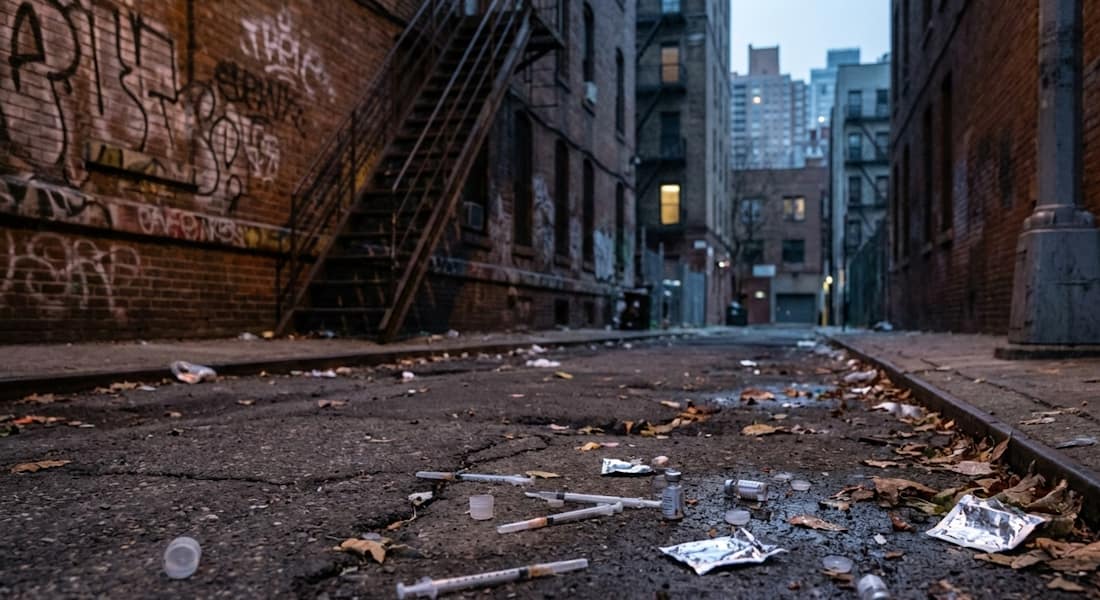
Cities promise opportunity, connection, and vibrant life. Yet behind gleaming skylines and bustling streets lies a darker reality—substance abuse rates in urban areas have surged to crisis levels, with overdose deaths in metropolitan regions outpacing rural communities by significant margins. The very features that make cities attractive—anonymity, accessibility, and constant stimulation—create perfect conditions for addiction to flourish unchecked.
This isn’t just a public health statistic. It’s the young professional masking burnout with cocaine, the homeless veteran self-medicating trauma with heroin, the college student popping pills to maintain impossible academic pressures. Urban substance abuse transcends socioeconomic boundaries, affecting neighborhoods from gentrified districts to marginalized communities, though consequences distribute unequally across these divides.
This article examines the complex factors driving substance abuse in urban environments, explores how city life uniquely contributes to addiction vulnerability, and outlines community-based solutions showing measurable success. You’ll gain insight into the sociological dynamics at play, recognize risk factors specific to urban settings, and discover evidence-based interventions that cities worldwide are implementing to address this escalating crisis.
The Urban Substance Abuse Landscape
Metropolitan areas face disproportionately high rates of substance use disorders compared to suburban and rural regions. Cities concentrate risk factors while simultaneously providing unprecedented access to drugs, creating an environment where addiction can develop rapidly and intensify quickly.
Current data reveals alarming trends across major urban centers:
- Opioid-related deaths in cities increased 54% between 2019 and 2023
- Methamphetamine use in metropolitan areas rose 43% over the past five years
- Cocaine-related emergency room visits in urban hospitals doubled since 2020
- Synthetic drug availability expanded dramatically through darknet distribution networks centered in cities
- Polysubstance use (combining multiple drugs) became the norm rather than exception among urban users
The Substance Spectrum
Urban substance abuse manifests across diverse categories, each with distinct user populations and risk profiles:
Opioids (heroin, fentanyl, prescription painkillers) dominate crisis conversations due to lethal overdose potential. Fentanyl contamination has transformed the drug supply, making any illicit substance potentially fatal.
Stimulants (cocaine, methamphetamine, prescription amphetamines) appeal to professionals managing demanding careers and students facing academic pressure. Their use correlates with high-stress, high-performance urban environments.
Sedatives (benzodiazepines, barbiturates) address anxiety and sleep problems endemic to city living. Many users begin with legitimate prescriptions before developing dependence.
Cannabis remains the most commonly used substance, with legalization in many urban areas normalizing use while concerns about high-potency products and heavy use patterns persist.
Synthetic drugs (K2/Spice, bath salts, designer drugs) proliferate in cities due to existing distribution networks and populations seeking novel experiences or cheaper alternatives.
Urban Risk Factors: Why Cities Breed Addiction
Understanding urban substance abuse requires examining how city environments uniquely contribute to addiction vulnerability through structural, social, and psychological mechanisms.
Chronic Stress and Burnout
Urban living generates persistent stressors that accumulate over time:
- Long commutes in congested traffic or overcrowded public transit
- Higher cost of living creating financial strain and housing insecurity
- Noise pollution and constant sensory stimulation preventing adequate rest
- Work cultures demanding availability beyond traditional hours
- Competition for resources intensifying pressure across life domains
Substances offer temporary relief from this relentless stress, with many urban professionals viewing drug use as necessary coping rather than problematic behavior.
Social Isolation in Crowded Spaces
The urban paradox manifests as profound loneliness amid millions of people. Cities enable anonymity that can liberate but also isolate:
- Transient populations with frequent residential turnover disrupting community bonds
- Long work hours limiting time for relationship building
- Digital communication replacing face-to-face connection
- Socioeconomic segregation creating invisible barriers between neighbors
- Individualistic cultures prioritizing achievement over community support
This isolation removes protective social networks while eliminating accountability that might otherwise discourage substance use.
Accessibility and Availability
Cities provide unparalleled drug access through multiple channels:
- Concentrated dealer networks operating in specific neighborhoods
- Delivery services bringing substances directly to consumers
- Dark web purchases shipped to urban addresses
- Homeless encampments where open-air drug markets operate
- Nightlife districts normalizing recreational drug use
- Medical professionals and pharmacies enabling prescription diversion
Geographic density means drugs remain consistently available regardless of enforcement efforts, with new suppliers rapidly replacing arrested dealers.
Economic Inequality and Marginalization
Urban areas concentrate both wealth and poverty in close proximity, creating stark disparities:
- Gentrification displacing long-term residents while increasing property values
- Service economy jobs offering insufficient wages despite rising costs
- Inadequate affordable housing pushing vulnerable populations toward homelessness
- Educational and employment discrimination limiting opportunities for marginalized groups
- Criminal justice system disproportionately targeting poor communities and people of color
These structural inequalities generate despair and trauma that substance use temporarily alleviates, while simultaneously limiting access to quality treatment for affected communities.
Population-Specific Vulnerabilities
Different urban demographic groups face distinct pathways into substance abuse, requiring tailored understanding and intervention.
Young Professionals
The ambitious urban professional demographic increasingly relies on substances to manage competing demands:
- Stimulants boosting productivity and compensating for sleep deprivation
- Alcohol facilitating networking and client entertainment
- Cannabis managing stress and aiding sleep
- Prescription medications addressing anxiety and focus challenges
- Party drugs maintaining social participation despite exhaustion
Career pressure combined with financial resources creates conditions where functional addiction develops gradually, often unrecognized until crisis occurs.
College Students
Universities concentrated in urban centers expose students to unique risks:
- Academic pressure driving study drug (Adderall, Ritalin) misuse
- Social expectations around drinking and drug experimentation
- Mental health challenges emerging during young adulthood
- Distance from family support systems
- Readily available substances through peer networks
- Limited life experience assessing addiction risk
Campus culture often normalizes heavy substance use as temporary behavior rather than recognizing developing dependencies.
Homeless Populations
Urban homelessness and substance abuse intertwine in complex, bidirectional relationships:
- Substances providing temporary escape from harsh street realities
- Addiction precipitating job loss and housing instability
- Trauma (including childhood abuse and violence) underlying both homelessness and substance use
- Lack of safe storage making medication management impossible
- Survival sex work and other risky behaviors for drug procurement
- Inadequate treatment access for those without stable housing
Addressing homelessness requires simultaneously addressing substance use disorders and vice versa.
Marginalized Communities
Systemic inequalities concentrate substance abuse impacts in specific urban populations:
- Communities of color facing both higher incarceration rates for drug offenses and lower treatment access
- LGBTQ+ individuals experiencing minority stress and discrimination
- Immigrants navigating acculturation challenges and uncertain legal status
- People with disabilities facing accessibility barriers to prevention and treatment services
- Economically disadvantaged neighborhoods with limited resources but abundant drug availability
The Ripple Effects: Urban Substance Abuse Consequences
Addiction in cities generates cascading effects extending far beyond individual users, straining systems and degrading quality of life across communities.
Public Health Crisis
Urban health systems bear disproportionate burdens:
- Emergency departments overwhelmed with overdose cases and drug-related injuries
- HIV and hepatitis C transmission through shared injection equipment
- Neonatal abstinence syndrome cases increasing in urban hospitals
- Mental health crises exacerbated by substance use
- Chronic disease management complicated by active addiction
- Healthcare worker burnout from managing repeated crises
Criminal Justice Strain
Cities dedicate enormous resources to drug-related enforcement:
- Arrests overwhelming court systems and jails
- Recidivism rates exceeding 70% when addiction remains untreated
- Organized crime profiting from drug distribution networks
- Property crime funding substance purchases
- Violence surrounding drug territories and transactions
- Disproportionate incarceration of marginalized communities
Economic Impact
The financial toll of urban substance abuse reaches billions annually:
- Lost productivity from absenteeism, presenteeism, and unemployment
- Healthcare costs for emergency treatment and chronic care
- Criminal justice expenditures on enforcement and incarceration
- Social services supporting affected families and children
- Property value decline in neighborhoods with visible drug activity
- Business losses from theft and reduced foot traffic
Community Degradation
Neighborhoods experiencing concentrated substance abuse face quality-of-life deterioration:
- Public spaces becoming unusable due to drug activity and paraphernalia
- Children witnessing drug use and experiencing secondary trauma
- Businesses closing or avoiding affected areas
- Social cohesion breaking down as neighbors isolate
- Trust eroding between communities and institutions
- Stigma preventing open discussion and solution-seeking
Evidence-Based Urban Interventions
Cities implementing comprehensive, multi-faceted approaches demonstrate measurable success in reducing substance abuse and its consequences.
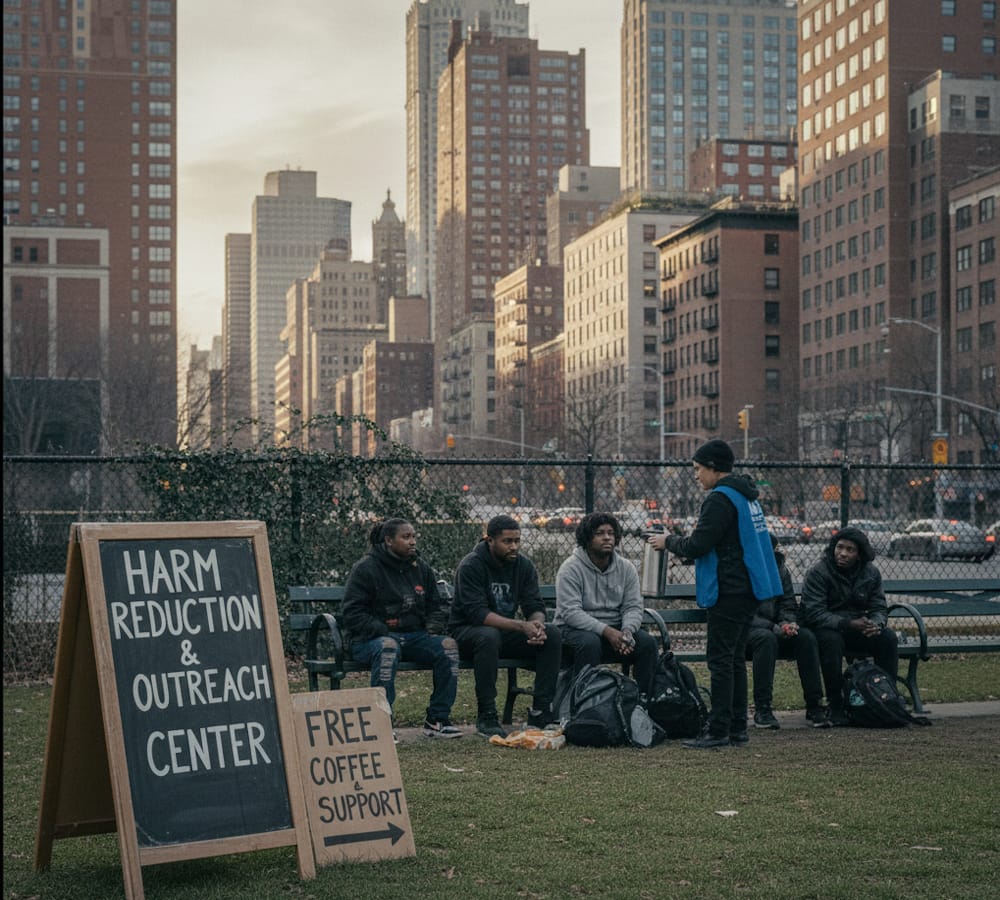
Harm Reduction Programs
Harm reduction acknowledges addiction’s reality while minimizing associated harms:
Supervised consumption sites provide safe, hygienic environments where people use pre-obtained drugs under medical supervision, dramatically reducing overdose deaths while connecting users to treatment services. Cities including Vancouver, Lisbon, and Sydney report 35-50% decreases in overdose fatalities near these facilities.
Needle exchange programs distribute sterile injection equipment, reducing HIV and hepatitis C transmission by up to 80% while serving as entry points for healthcare and social services.
Naloxone distribution equips community members with overdose reversal medication. Training programs targeting users, families, and first responders save thousands of lives annually.
Drug checking services test substances for dangerous contaminants like fentanyl, enabling informed decisions and alerting communities to particularly risky batches circulating.
Treatment Access Expansion
Effective urban substance abuse response requires removing barriers to evidence-based care:
- Low-barrier treatment eliminating prerequisites like abstinence, insurance, or identification before service provision
- Medication-assisted treatment (MAT) using methadone, buprenorphine, or naltrexone to manage opioid dependence with dramatically improved outcomes versus abstinence-only approaches
- Mobile treatment units bringing services directly to underserved neighborhoods and homeless encampments
- Integrated care models addressing substance use alongside mental health and medical needs within single programs
- Peer recovery support employing individuals with lived addiction experience to provide guidance and hope
Housing-First Initiatives
Recognizing stable housing as foundational to recovery, progressive cities implement:
- Permanent supportive housing combining affordable units with wraparound services
- Rapid rehousing programs moving homeless individuals into apartments quickly
- Harm reduction housing accepting active substance users without sobriety requirements
- Tenant protections preventing eviction for addiction-related behaviors
- Coordinated entry systems efficiently matching people to appropriate housing resources
Community-Based Prevention
Upstream interventions address root causes before substance abuse develops:
- Youth mentorship programs providing positive relationships and activities
- Economic opportunity initiatives creating pathways to stable employment
- Mental health services in schools, community centers, and primary care settings
- Trauma-informed approaches recognizing and addressing adverse childhood experiences
- Community organizing empowering neighborhoods to shape local responses
Policy Reforms
Structural changes show promise for reducing urban substance abuse:
Decriminalization removes criminal penalties for personal drug possession, redirecting resources toward treatment. Portugal’s 20-year decriminalization experiment demonstrated 50% reduction in drug-related deaths and 18% decrease in drug use among problematic populations.
Safe supply programs prescribe pharmaceutical-grade substances to people with severe addictions, eliminating contaminated street drugs’ risks while stabilizing lives.
Zoning reforms prevent treatment facility concentration in marginalized neighborhoods while ensuring equitable distribution across cities.
Sentencing alternatives divert people from incarceration toward treatment, with drug courts showing 35% lower recidivism than traditional prosecution.
Building Resilient Urban Communities
Long-term solutions require addressing substance abuse as symptom of deeper urban challenges rather than isolated individual failing.
Strengthening Social Fabric
Communities with strong bonds demonstrate natural resilience against addiction:
- Create public gathering spaces encouraging interaction and relationship building
- Support neighborhood associations and community organizations
- Design streets prioritizing pedestrians and human-scale interaction
- Celebrate cultural diversity while building inclusive shared identity
- Facilitate intergenerational connections reducing isolation across age groups
Addressing Economic Inequality
Reducing the desperation driving substance abuse requires structural economic change:
- Expand living wage requirements and worker protections
- Increase affordable housing availability through construction and rent stabilization
- Invest in public education and workforce development
- Provide universal healthcare access eliminating cost barriers
- Reform tax structures ensuring corporations and wealthy individuals contribute fairly
Improving Urban Livability
Cities designed for human wellbeing naturally reduce stress and substance abuse risk:
- Prioritize green space and nature access throughout urban areas
- Reduce noise and air pollution through traffic calming and emission standards
- Ensure accessible public transportation reducing commute stress
- Support work-life balance through labor regulations and cultural shifts
- Create environments enabling physical activity and healthy lifestyles
Transforming Drug Policy
Evidence increasingly supports treating substance use as health issue rather than criminal matter:
- Redirect enforcement resources from users toward traffickers and violent crime
- Expunge records for past drug possession convictions
- Invest drug war budgets into prevention and treatment
- Regulate substances enabling quality control and taxation funding services
- Center affected communities and public health expertise in policy development
Personal and Community Action Steps
Individual and collective action contributes to addressing urban substance abuse:
If You’re Struggling
- Acknowledge the problem honestly without shame—addiction is a medical condition, not moral failing
- Reach out to trusted people sharing what you’re experiencing
- Contact local treatment providers or call SAMHSA’s National Helpline (1-800-662-4357) for free, confidential referrals
- Explore multiple treatment modalities finding approaches matching your needs
- Join support groups connecting with others navigating recovery
- Practice self-compassion through setbacks—recovery rarely follows linear paths
Supporting Loved Ones
- Educate yourself about addiction and recovery to respond effectively
- Express concern using “I” statements focused on specific behaviors rather than accusations
- Set healthy boundaries protecting your wellbeing while remaining available
- Avoid enabling by shielding them from consequences or providing money potentially funding use
- Connect them with professional resources and treatment options
- Seek support for yourself through Al-Anon, therapy, or support groups
Community Engagement
- Volunteer with local harm reduction organizations, recovery centers, or prevention programs
- Attend city council meetings advocating for evidence-based policies
- Support businesses employing people in recovery
- Challenge stigmatizing language and attitudes about addiction
- Donate to organizations providing services in your community
- Build relationships across socioeconomic divides fostering empathy and understanding
The Path Forward: Hope Amid Crisis
Urban substance abuse represents one of our most pressing social challenges, yet cities also concentrate the resources, innovation, and diversity needed to address it effectively. Communities implementing comprehensive strategies combining treatment access, harm reduction, economic opportunity, and community development demonstrate measurable progress.
Recovery happens daily in cities worldwide—the professional rebuilding career and relationships after cocaine addiction, the veteran finding stable housing and sobriety after years on streets, the college student choosing healthier stress management replacing prescription pills. These individual stories aggregate into community transformation when supported by adequate resources and evidence-based approaches.
The crisis didn’t develop overnight and won’t resolve quickly, but the tools exist to dramatically reduce substance abuse and its devastating consequences. Implementation requires political will, sustained investment, and cultural shift from punishment to compassion, from individualism to collective responsibility.
What’s your experience with substance abuse in your urban community? Share your thoughts, stories, or questions in the comments below. If this article resonated with you, share it with your networks—raising awareness is crucial for building support for effective solutions. Together, we can create cities where people thrive rather than merely survive.


